



How long does it take to get a biocompatibility test report?
Biocompatibility testing is a method used to assess many medical materials that come into contact with the human body. Only materials that pass the relevant tests can be approved for market use. Typically, a test report is issued after successfully passing the biocompatibility evaluation. But how long does this process take?
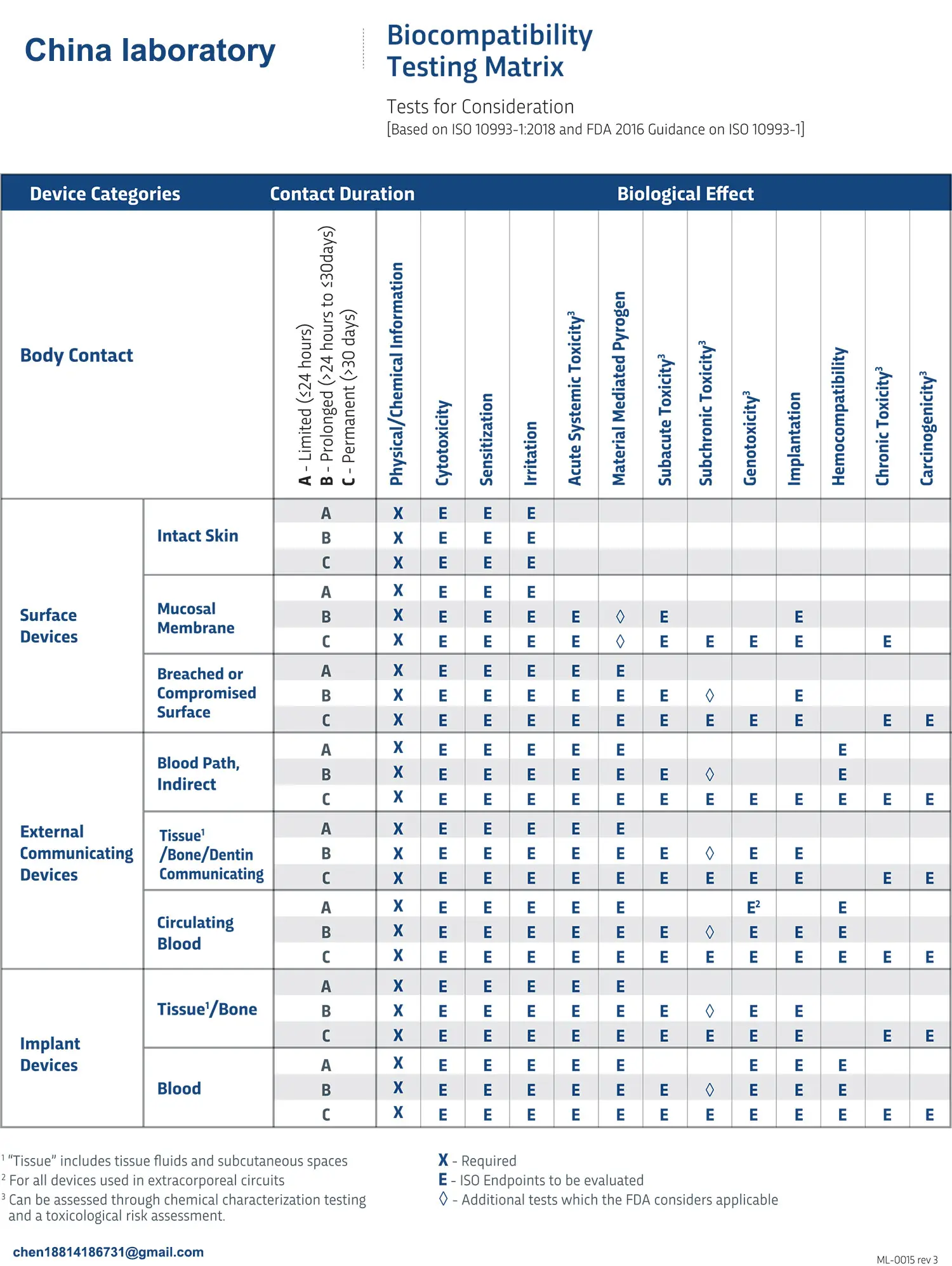
The time required to obtain a biocompatibility test report depends on the specific material being tested. For instance, iso 10993 testing usually takes approximately 35 working days. In comparison, biocompatibility testing for disposable masks typically requires around 10–15 working days. The exact time frame for a test report can be determined based on the material being tested, and China's JJR Laboratory will provide an estimated timeline accordingly.
Biocompatibility refers to the adaptability between medical materials and the tissues and physiological systems of the patient. The successful and safe clinical use of medical materials is primarily due to their good biocompatibility. In some cases, medical materials may release toxic substances during use, which are incompatible with the patient. To monitor biological compatibility, testing generally simulates the worst-case scenario of medical materials and their extracts to ensure safety under normal usage conditions.
Email:hello@jjrlab.com
Write your message here and send it to us
 What is UL 1642 Compliance Certification?
 What Is Amazon's UL 60335 Standard
 How to get a UL 60335 Test Report
 What is UL 60335 Certification Compliance?
 What is EN 61000 Certification Compliance?
 How to get an EN 61000 Test Report?
 What is the Amazon EN 55035 Standard?
 What is EN 55035 Certification Compliance?
Leave us a message
24-hour online customer service at any time to respond, so that you worry!