



EU RED Cybersecurity Standard EN 18031 Testing
Adoption of en 18031 Series Standards
The EN 18031 series standards were approved by vote in May 2024 and officially adopted as harmonized standards under the Radio Equipment Directive (RED).
Background of EN 18031
EN 18031 is a set of draft standards issued by the EU to address the RED cybersecurity requirements. This signifies the availability of a dedicated EN standard to demonstrate compliance with the cybersecurity requirements under the red directive. The EN 18031 series standards were approved by vote, with the final version officially published on **August 30, 2024**, and will become mandatory thereafter.
Evaluation Items in EN 18031
EN 18031-1
General security requirements for radio equipment - Part 1: Internet-connected radio equipment.
EN 18031-2
General security requirements for radio equipment - Part 2: Data processing radio equipment, including networked radio equipment, children’s radio equipment, toy radio equipment, and wearable radio equipment.
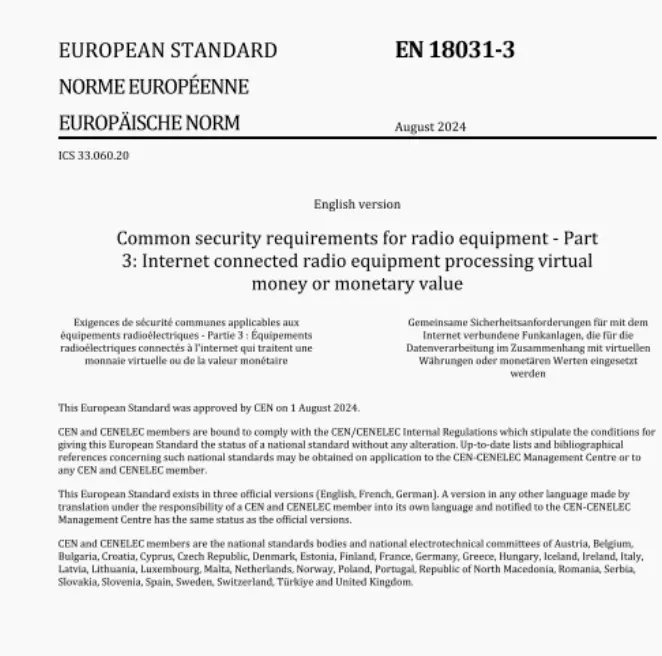
EN 18031-3
General security requirements for radio equipment - Part 3: Radio equipment that processes virtual currency or monetary value through an internet connection.
Scope of Products Covered
The authorization regulation 2022/30/EU includes devices capable of direct or indirect communication over the internet and radio equipment that may expose sensitive personal data. Examples include:
1. Mobile phones, tablets, and laptops;
2. Wireless toys and child safety devices, such as baby monitors;
3. Wearable devices like smartwatches and fitness trackers.
Asset Categories Assessed under EN 18031
EN 18031 divides the assessment targets into the following asset categories:
1. **Security Assets**
2. **Network Assets**
3. **Privacy Assets**
4. **Financial Assets**
Key Differences Between EN 18031 and EN 303 645
EN 303 645 is currently the most widely used cybersecurity assessment standard for IoT devices. While EN 18031 shares many similarities with EN 303 645, it introduces stricter requirements for the evaluated devices. EN 18031 also provides multiple “not applicable” conditions, offering greater flexibility and applicability in conformity assessments. In summary, compliance with EN 303 645 will significantly benefit organizations and their products in meeting EN 18031 evaluation standards.
Email:hello@jjrlab.com
Write your message here and send it to us
 What is EN 61000 Certification Compliance?
 How to get an EN 61000 Test Report?
 What is the Amazon EN 55035 Standard?
 What is EN 55035 Certification Compliance?
 How to get the EN 55035 Test Report?
 What is the Amazon EN 301 489 Standard?
 How to get an EN 301 489 Test Report?
 What is EN 301 489 Compliance Certification?
Leave us a message
24-hour online customer service at any time to respond, so that you worry!